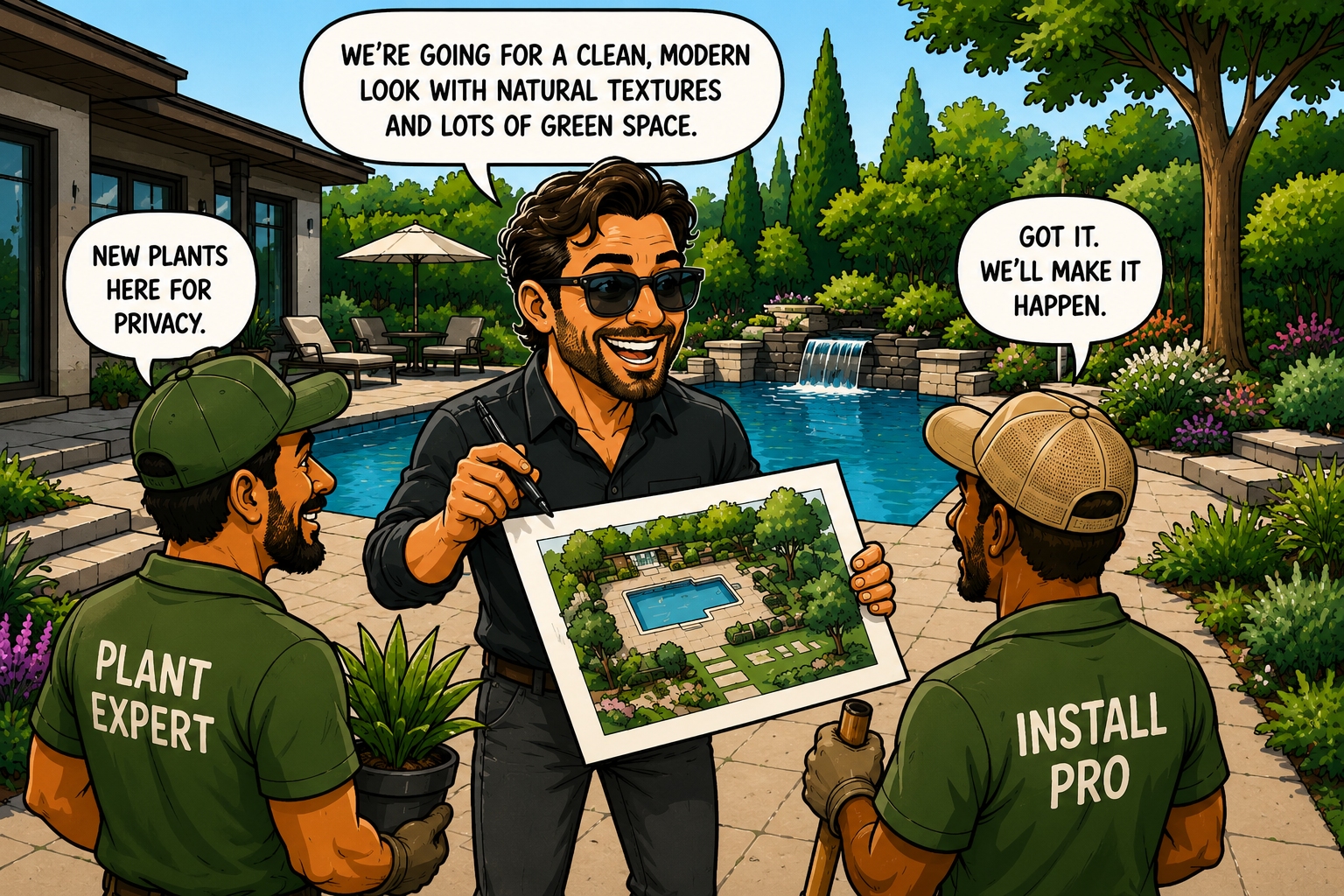
Before buying plants or laying pavers, take a step back and look at the property itself.
If your backyard already has mature oak trees, dense greenery, shade, and natural textures — lean into it. Fighting the environment around you almost always looks worse than working with it.
Match the Environment Around You
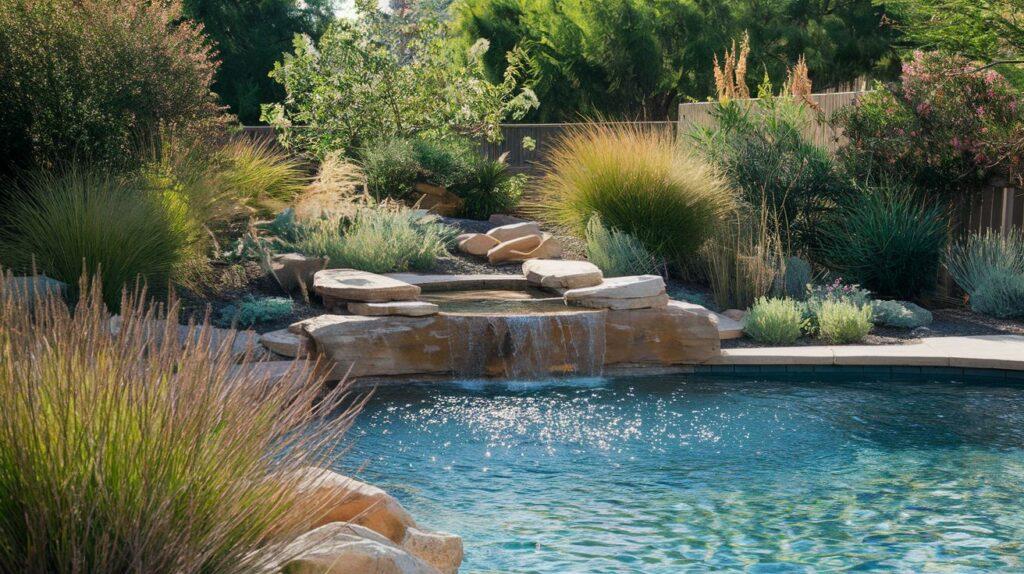
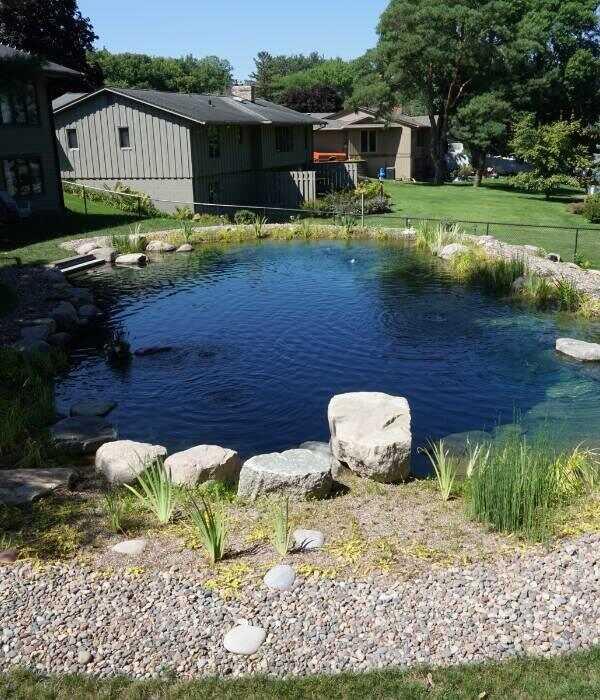
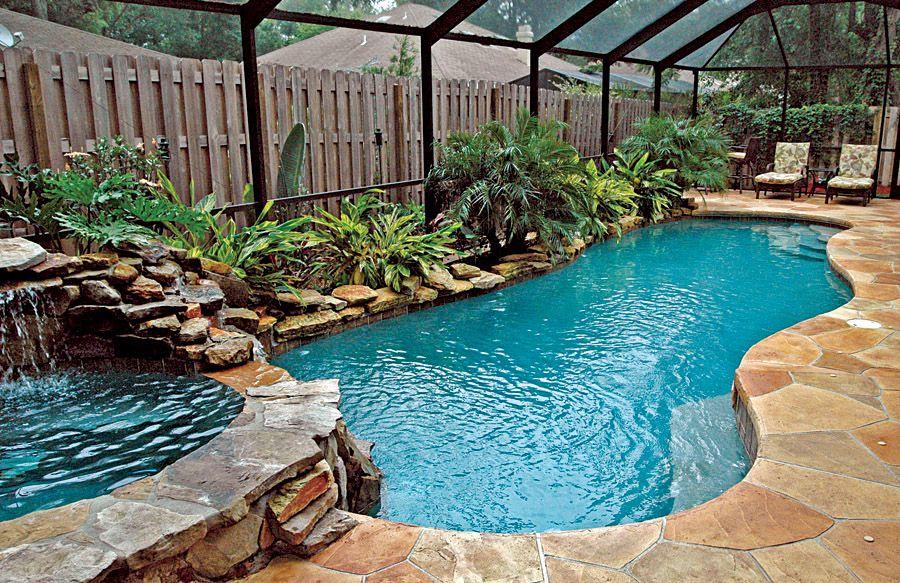
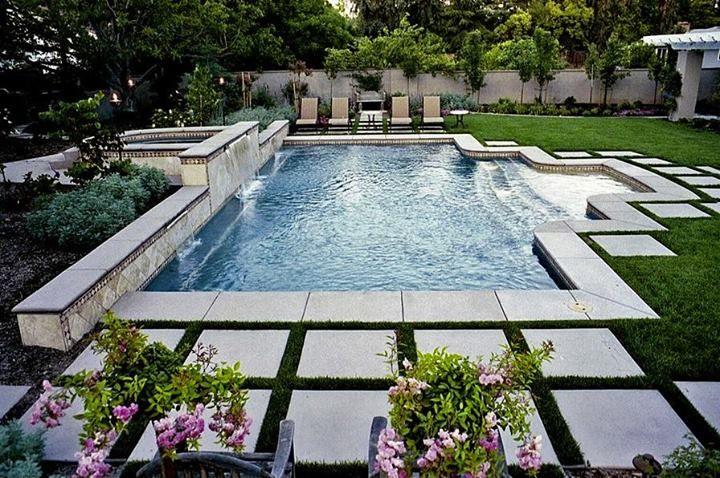
Natural-style pool landscapes tend to work best with softer lines, natural stone, slate, darker water colors, layered greenery, ornamental grasses, and organic transitions.
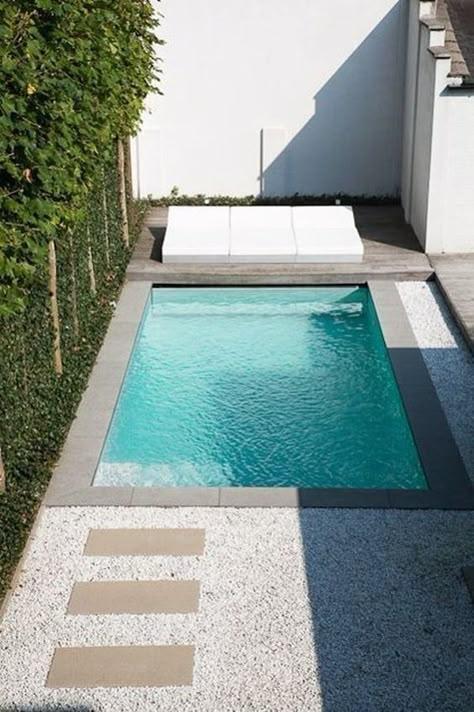
Modern pool landscaping typically includes straight lines, symmetrical planting, minimalist layouts, controlled greenery, large-format pavers, and consistent color palettes.
Trying too hard usually looks worse than keeping things simple.
Natural / Organic Style
The best natural-style pools blend into the environment instead of fighting it. These designs typically work well in wooded lots, mature neighborhoods, tropical settings, and properties with existing natural texture.
The goal is for the pool to feel like part of the landscape rather than something dropped into it.
Clean Modern Style
Modern landscaping works best when it stays restrained.
Simple geometry, controlled greenery, negative space, and consistent materials usually age far better than over-designed layouts.
Clean doesn't mean cold. It means intentional.
Leave Some Damn Greenspace
Another major mistake is overbuilding the backyard.
People get excited and suddenly every square foot becomes pavers, travertine, decorative gravel, retaining walls, planters, fake waterfalls, and multiple elevation changes.
Then the yard starts feeling hot, crowded, and visually stressful.
Grass matters. Open space matters. Negative space matters. Your eyes need somewhere to rest.
Even high-end projects usually leave intentional breathing room around the pool because it actually makes the space feel larger and more luxurious. A simple lawn section can honestly elevate the entire backyard.
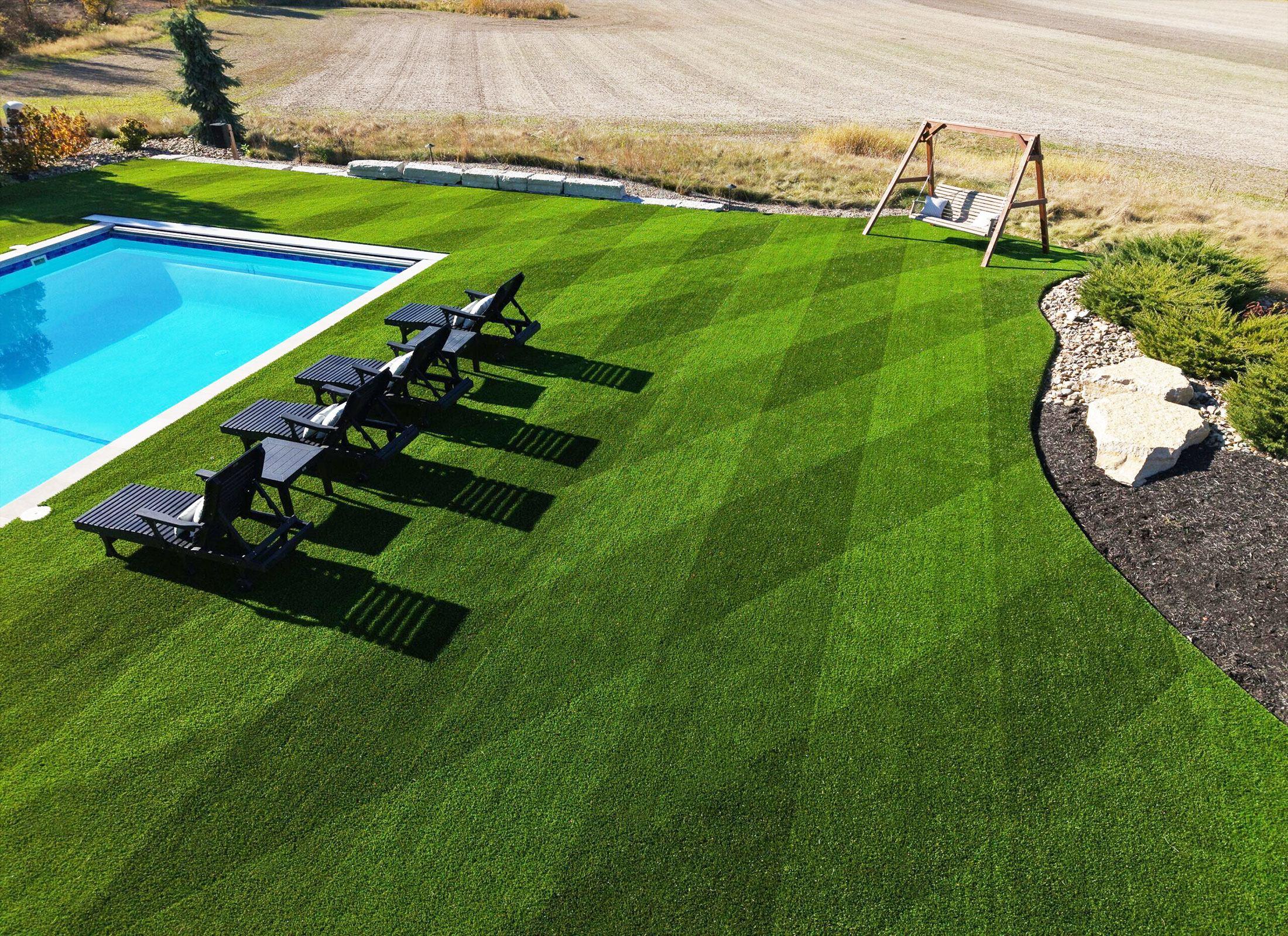
And if maintaining natural grass sounds miserable to you, this is also where artificial turf can make sense — when used strategically.
Good turf applications can:
- Reduce maintenance
- Eliminate muddy areas
- Keep visual greenery in the design
- Create cleaner transitions around hardscape
The key is restraint. Small turf accents, side yards, narrow strips, and integrated sections usually look far better than turning the entire backyard into neon green carpet.
Bad turf installations scream cheap. Well-designed turf blends into the landscaping so naturally most people barely notice it.
Balling on a Budget
You do not need a $300,000 backyard to make a pool area feel high-end. A lot of expensive-looking landscaping simply comes down to clean edges, consistent materials, proper spacing, mature-looking greenery, quality lighting, and not overcrowding the design.
1. Use Turf Strategically
Turf can absolutely work — the trick is not turning your backyard into a football field made of plastic. Turf works best in side yards, small accent areas, narrow maintenance strips, between pavers, and areas where grass constantly dies.
2. Buy Smaller Plants
You do not need fully mature landscaping on day one. Many landscaping companies heavily mark up mature palms and shrubs anyway. Smaller plants usually establish better, adapt faster, and cost dramatically less. Give them a few years and the yard fills in naturally.
3. Use Lighting Instead of More Hardscape
Good lighting changes everything. A few properly placed uplights on trees combined with quality pool lighting can completely transform the backyard at night — often far cheaper and more effective than adding unnecessary structures or decorative features.
4. Don't Overdo Mulch Colors
Bright red mulch next to a luxury pool usually looks insane. Stick with natural brown, black, pine straw in wooded settings, or decorative gravel that matches the environment. Neutral colors almost always age better.
Think About Maintenance Before You Build
Some landscapes look incredible for exactly eleven minutes after installation. Then leaves clog the pool, roots start lifting decking, flowers constantly die, and the owner realizes they created a second full-time job.
Near pools, hardy plants with minimal shedding, lower root aggression, and drought-tolerant options almost always outperform high-maintenance showpieces. Because nobody wants to skim their pool four times a day.
Landscaping Should Frame the Pool, Not Compete With It
Your pool is already the centerpiece. Landscaping should support the water, not distract from it.
The best backyard designs usually have one focal point, consistent material choices, repetition in plant selection, balanced colors, and enough breathing room. That's why simple designs often age better than trendy ones.
Final Thoughts
The best pool landscaping usually feels effortless — not because it was cheap, and not because it was simple, but because it was intentional.
Match the environment around your home. Leave greenspace. Use lighting intelligently. Spend money where it matters. And if mowing drives you insane, use turf strategically and save yourself some Saturdays.
A backyard should feel like somewhere you want to be barefoot with a drink in your hand — not a maintenance prison you regret building six months later.