Most pool resurfacing companies don't tell you what's actually in their product. They lead with price and warranties, but the material doing the actual work — the resin — is rarely discussed.
Here's why it matters.
The Two Types of Resin
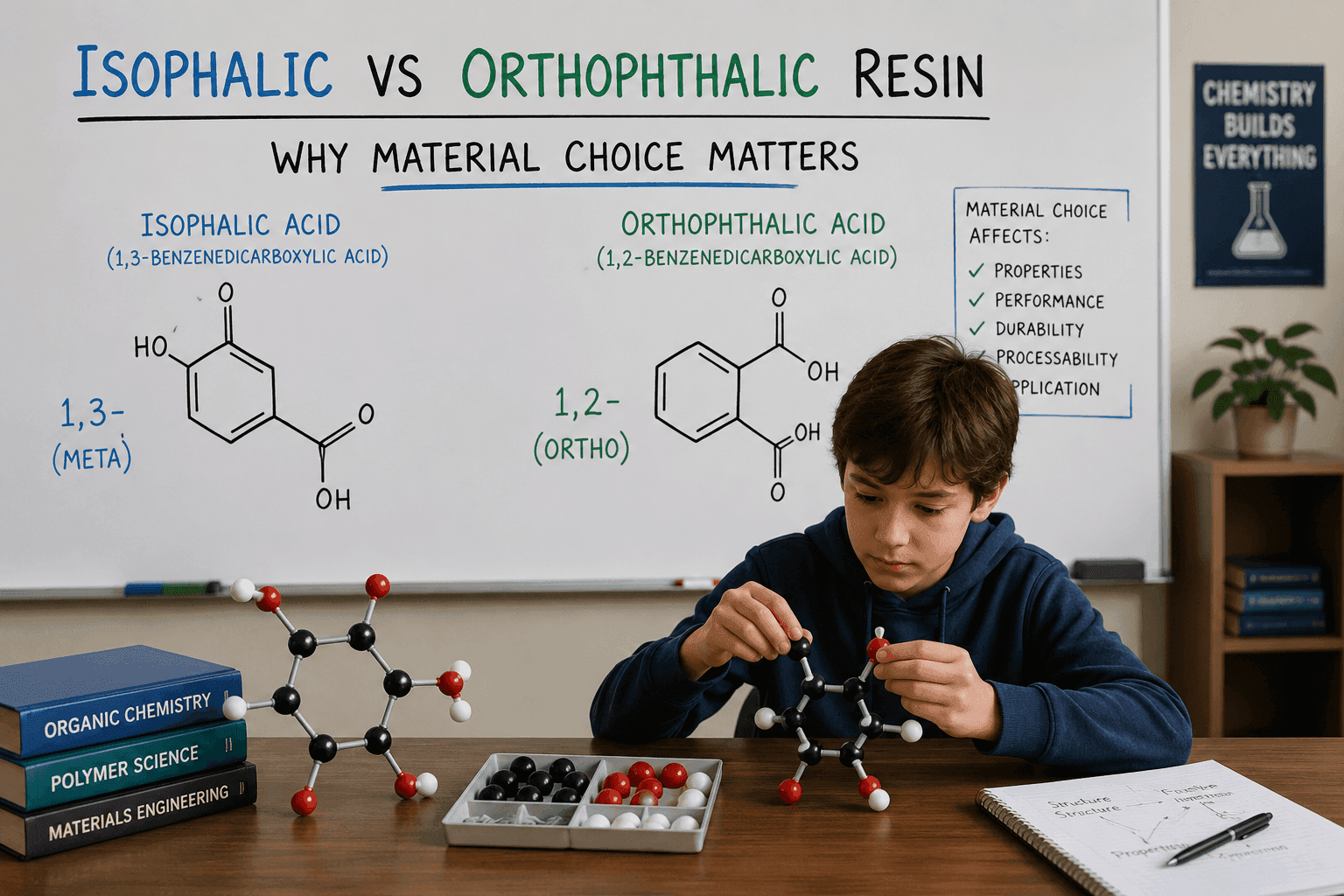
Orthophthalic resin is the lower-cost option. It's widely used because it's cheap and easy to work with. But orthophthalic resin absorbs water over time, which leads to blistering, delamination, and early failure — especially in a pool environment where it's submerged 24/7.
Isophthalic resin is the marine industry standard. Boats, offshore equipment, and anything designed to live in water long-term is built with isophthalic chemistry. It resists water absorption, handles chemical exposure, and maintains structural integrity far longer.
What Fibre Tech Uses
Fibre Tech's system uses a proprietary blend of 100% ISO and VE (vinyl ester) resin — not as a marketing claim, but because it's the right material for the application.
The vinyl ester component adds an additional layer of chemical resistance that straight isophthalic resin doesn't provide. This matters in pool environments where you're dealing with chlorine, pH adjusters, and algaecides on a constant basis.
The Bottom Line
When you're evaluating a resurfacing proposal, ask what resin is being used. If they can't tell you — or if the answer is orthophthalic — you're looking at a system that will likely need attention within 5–10 years.
A properly installed isophthalic/VE system, applied over a sound substrate with proper surface preparation, is designed to last 25 years or more.
That's the difference.
If you want to know exactly what's in the system being proposed for your pool, request a free estimate and we'll walk through the materials, layers, and warranty in detail.